
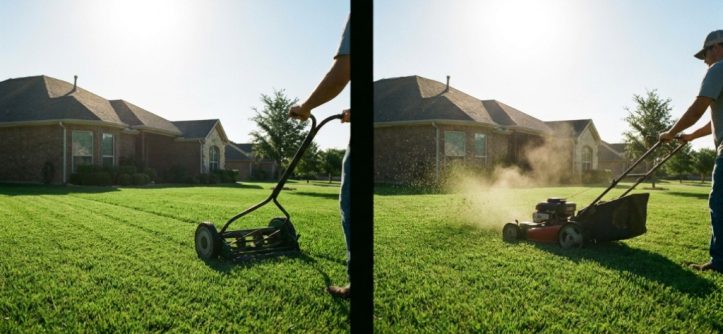
If you’re mowing a Texas lawn, you’re dealing with heat, tough grass species like St. Augustine and Bermuda, and a growing season that can stretch most of the year. That combination makes the choice between a manual reel mower vs gas mower more consequential than in milder climates. This article breaks down where the American Lawn Mower 1204 reel mower genuinely works in Texas, where a gas mower still wins, and how to decide based on your actual yard rather than general advice.
Key Takeaways
- The reel mower 1204 is best suited to small, relatively level Texas lawns with warm-season grasses cut frequently at a low height.
- Gas mowers handle large lots, tall or wet grass, weeds, and uneven terrain far better than any push reel mower.
- Reel mowers cut grass like scissors and can produce a cleaner clip on Bermuda and similar fine-bladed grasses when maintained.
- Heat, mowing frequency, and grass type matter more in Texas than in most regions, so climate-specific trade-offs should drive your decision.
- A reel mower is not a replacement for a gas mower on a half-acre lot with thick St. Augustine and spotty maintenance.
What the Reel Mower 1204 Actually Is
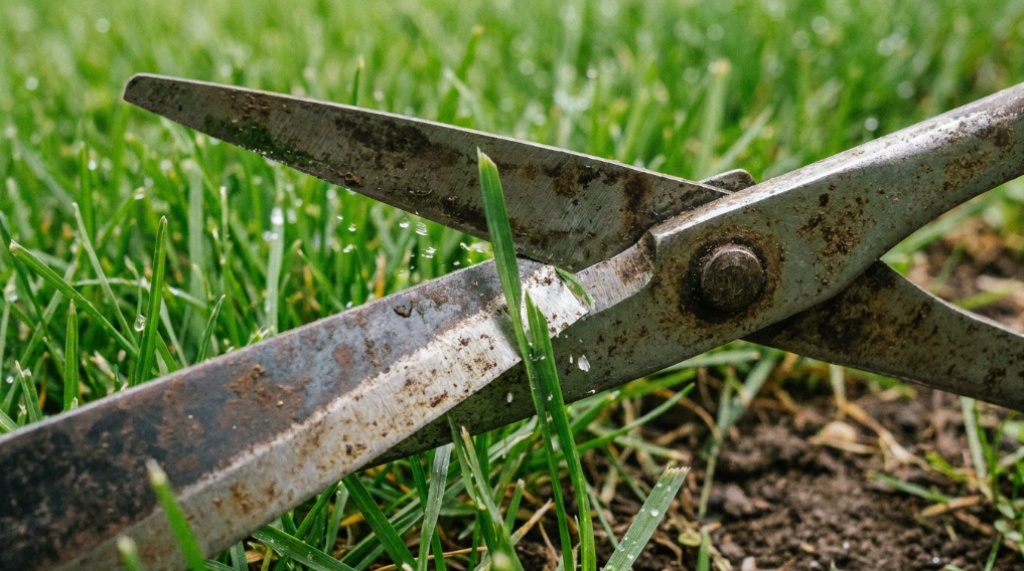
The American Lawn Mower 1204 is a push reel mower: no engine, no battery, no cord. You push it, the wheels turn the reel, and the reel blades shear grass against a stationary bed knife. That scissor-like cut is the defining characteristic, and it’s the reason reel mowers have a devoted following among people who care about lawn appearance.
It is a manual mower, which means the power source is you. On a small, flat, frequently mowed lawn, that’s manageable. On a large or neglected lawn in Texas heat, it’s a different story. The comparison between a manual reel mower vs gas mower often comes down to whether your lawn’s condition and size match what a reel mower can realistically handle.
How a reel cut differs from a rotary cut
A gas mower typically uses a rotary blade spinning horizontally that hacks grass off at speed. A reel mower slices it. The slicing action tends to leave a cleaner cut edge, which can reduce the browning and fraying you see on grass cut by a dull rotary blade. On fine-bladed grasses like Bermuda, that difference is visible. On thick, coarse grass, it’s much less noticeable — and the reel has a harder time getting through it at all.
Where the Reel Mower 1204 Wins in Texas
The 1204 makes the most sense on small, well-kept lawns where you mow often and the grass stays short. Texas has a lot of those situations, especially in suburban lots with Bermuda or Zoysia that homeowners cut regularly.
- Small yards: Front lawns, courtyard lots, and townhome yards are where manual mowing is realistic.
- Level ground: Texas has plenty of flat lots, and a reel mower performs best on them.
- Frequent, light cuts: If you mow every few days during peak growth, a reel handles it fine.
- Quiet operation: No engine noise matters on smaller lots and in neighborhoods with noise limits.
- No fuel, no fumes, no pull-start: Simplicity is a real advantage in summer heat.
The key pattern: the reel mower works when you stay ahead of the grass. In Texas, where Bermuda and St. Augustine can grow aggressively in warm, watered conditions, that means discipline more than equipment.
Where a Gas Mower Clearly Wins in Texas
A gas mower wins in almost every situation where the lawn is large, the grass is tall, or the terrain is uneven. There’s no way around that. Texas lawns frequently fall into at least one of those categories.
Large lots and acreage
If you’re mowing a quarter acre or more in Texas summer heat, pushing a reel mower stops being practical. Gas mowers — especially self-propelled models — move the machine for you, which matters when it’s 95°F and humid.
Tall, thick, or wet grass
Reel mowers cannot handle tall grass. They bind, stall, and leave uncut strips. St. Augustine in particular is thick and tough, and a reel mower struggles with it when it’s even slightly overgrown. If your lawn gets away from you between mowings, a gas mower recovers it; a reel mower often can’t.
Weeds and rough spots
Weeds, thick stems, and uneven patches are hard on reel blades and can damage the cutting edge. Gas mowers with rotary blades are far more forgiving.
Terrain and obstacles
Slopes, bumpy ground, and scattered landscaping slow a manual mower far more than a powered one, and pushing uphill in Texas heat is a real physical cost.
Texas-Specific Factors That Change the Decision
Three things matter more in Texas than in cooler climates, and they tend to push the decision toward gas unless your situation is small and controlled.
Growing season length
Warm-season grasses in Texas can grow actively for much of the year. That means more mowings, which magnifies the effort difference between pushing a reel and driving a gas mower.
Grass species
Bermuda and Zoysia are fine-bladed and respond well to a reel cut. St. Augustine is coarse and thick, and it’s a poor match for most push reel mowers. If you have St. Augustine, that single fact often settles the question. If your grass is struggling to absorb water and nutrients after heavy mowing seasons, you might want to learn how to aerate the lawn.
Heat and physical effort
A manual reel mower requires you to supply all the energy, and Texas summers make that a meaningful consideration. For a small lawn, it’s fine. For a large one, it’s a genuine commitment.
Direct Comparison
| Factor | Manual Reel Mower 1204 | Gas Mower |
|---|---|---|
| Best lawn size | Small (roughly front-yard scale) | Medium to large |
| Cut quality on fine grass | Excellent when sharp and maintained | Good, depends on blade sharpness |
| Handling tall or wet grass | Poor | Good |
| St. Augustine performance | Weak | Strong |
| Effort in Texas heat | High | Low to moderate |
| Noise and emissions | None | Engine noise and exhaust |
| Maintenance | Blade sharpening, occasional adjustment | Fuel, oil, spark plugs, air filters, blades |
| Upfront simplicity | Very simple | More complex |
The table isn’t close on large Texas lawns. It’s only competitive on small, flat, well-maintained ones.
How to Decide for Your Texas Lawn
Answer these questions honestly before choosing.
- How big is your lawn? If it takes more than about 20–30 minutes to push-mow, a reel mower becomes a chore in Texas heat.
- What grass do you have? Bermuda or Zoysia favor a reel. St. Augustine favors gas.
- How often can you mow? Reel mowers require frequency. If you mow weekly at best and sometimes skip, gas is safer.
- Is the ground level? Slopes and bumps hurt manual mowing more than powered mowing.
- Do you want quiet and low maintenance, or speed and power? That honest preference matters as much as the specs.
Can a Reel Mower Replace a Gas Mower in Texas?
For a small, flat, Bermuda or Zoysia lawn that you mow often, yes — a reel mower can fully replace a gas mower. For anything larger, thicker, or less frequently maintained, no. The most common realistic scenario is a homeowner using a reel mower on a small front lawn and keeping a gas mower for the back or for backup after growth gets ahead.
That hybrid approach is common for good reason. It lets you get the clean reel cut where it matters while avoiding the situations a reel simply can’t handle.
Frequently Asked Questions
Is a manual reel mower good for St. Augustine grass?
Generally no. St. Augustine is thick and coarse, and push reel mowers struggle to cut it cleanly, especially when it’s even slightly overgrown. Bermuda and Zoysia are much better matches.
How often do you need to mow with a reel mower in Texas?
Often — typically every few days during peak warm-season growth. Reel mowers rely on frequent, light cuts and don’t recover well from tall grass.
Are reel mowers harder to push in Texas heat?
They require more physical effort than a self-propelled gas mower, and Texas summer heat makes that difference more noticeable. On a small, flat lawn it’s manageable; on a large one it isn’t.
Does a reel mower give a better cut than a gas mower?
On fine-bladed grass, a properly sharpened reel mower can produce a cleaner cut because it slices rather than tears the grass. On coarse grass, the advantage largely disappears.
Can the reel mower 1204 handle weeds?
It handles thin weeds reasonably but struggles with thick stems and heavy weed growth. Dense weeds can also dull or damage the reel blades.
Should I keep a gas mower if I buy a reel mower?
If your lawn is small and uniform, you may not need to. If your lawn is large, uneven, or has thick grass, keeping a gas mower for those areas and backup cuts is a practical compromise.
Conclusion
On a small, level Texas lawn with fine-bladed grass you mow often, the reel mower 1204 is a genuinely good choice — quiet, simple, and capable of a clean cut. On a large lot, thick St. Augustine, uneven ground, or a lawn that sometimes gets ahead of you, a gas mower wins without much debate. Match the mower to your grass species, lot size, and mowing frequency, and the decision usually makes itself.



Leave a Reply