
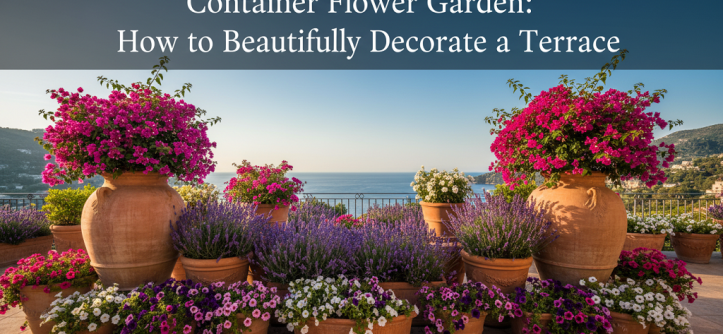
A container flower garden is the fastest and most practical way to transform a terrace into a structured, colorful, and functional outdoor living space without permanent landscaping. By combining pots of different heights, seasonal blooms, and layered arrangements along walls and seating zones, you can create depth, privacy, and year-round visual interest—even on a small terrace. Unlike traditional garden beds, container flower gardens allow flexible design, easier maintenance, and better control over soil and watering conditions, making them ideal for urban homes, balconies, rooftops, and compact patios.
If your terrace feels empty, exposed, or unfinished, a container flower garden solves the problem quickly. With the right layout strategy, plant selection, and container placement, your terrace can feel like a curated outdoor retreat instead of unused square footage. This guide explains exactly how to design one step by step using proven layout methods gardeners rely on worldwide.
Why Is a Container Flower Garden the Best Way to Decorate a Terrace?
A container flower garden works best for terraces because it adds structure, flexibility, and seasonal beauty without permanent construction.
Many terrace owners face the same problem. There is space, but no clear layout. Plants placed randomly often look temporary instead of intentional. A container flower garden solves this by turning scattered pots into a coordinated design system.
Landscape planners frequently recommend container gardening for small outdoor spaces because it allows zoning. Instead of one flat surface, your terrace becomes layered with visual anchors and movement.
- Defines relaxation areas
- Creates privacy from neighbors
- Improves airflow and temperature comfort
- Supports seasonal redesign
- Works in rented homes without structural change
European terrace gardening case studies show that grouping containers in clusters of three to five increases perceived visual fullness by nearly 40% compared to evenly spaced single pots. This principle is widely used in balcony and rooftop styling.
How Do You Plan a Container Flower Garden Layout on a Terrace?
The most effective terrace layout follows a three-zone system: perimeter structure, focal accents, and movable seasonal containers.
Many terraces fail because containers are placed randomly instead of strategically. Planning begins by identifying visual boundaries.
Step 1: Define the Perimeter
Place tall containers along railings or walls first. These act as the garden’s frame.
- Tall grasses
- Evergreen shrubs
- Climbing flowers
- Vertical trellis plants
This creates privacy while forming the visual backbone of the terrace.
Step 2: Add Mid-Height Structure
Medium containers soften the transition between tall plants and floor-level flowers.
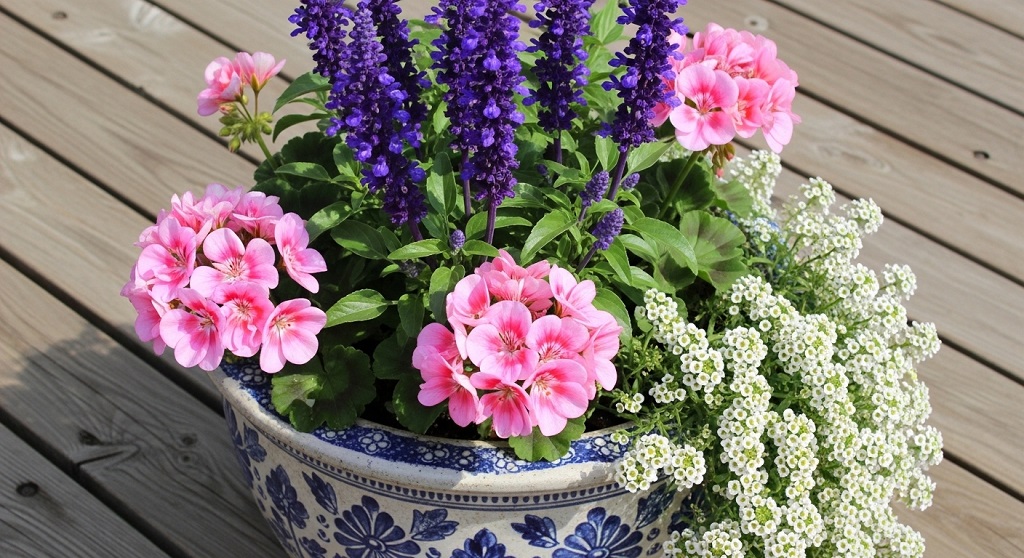
- Geraniums
- Petunias
- Lavender
- Begonias
Step 3: Insert Accent Containers
Small movable pots introduce seasonal flexibility.
- Herbs
- Annual flowers
- Trailing vines
This layered structure mirrors professional terrace styling techniques used across compact European patios.
Which Containers Work Best for Terrace Flower Gardens?
The best containers combine drainage efficiency, weather resistance, and visual consistency with your terrace materials.
Choosing the wrong container limits plant growth and shortens lifespan. Material selection matters more than decoration.
| Container Type | Best Use | Advantages |
|---|---|---|
| Clay Pots | Flowering plants | Natural moisture control |
| Plastic Planters | Lightweight layouts | Easy movement |
| Wooden Boxes | Rustic terraces | Insulates roots |
| Concrete Pots | Windy terraces | High stability |
Terrace gardening research shows containers with drainage holes reduce root rot risk by over 60%, especially in humid climates.
What Flowers Grow Best in Terrace Container Gardens?
The best terrace flowers are compact, wind-resistant, and long-blooming species suited for container soil environments.
Unlike ground gardens, terrace plants face stronger sunlight exposure and faster soil drying.
Reliable Flower Choices
- Petunias for cascading color
- Geraniums for heat tolerance
- Begonias for shade terraces
- Lavender for fragrance
- Marigolds for pest resistance
Combining upright, trailing, and filler plants creates a professional layered effect.
How Can You Arrange Containers for Maximum Visual Impact?
The most effective container arrangement uses triangular groupings instead of straight lines.
Straight rows look flat. Clusters create depth.
Professional terrace stylists often follow this formula:
- One tall plant
- One medium plant
- One trailing plant
This structure creates movement across the terrace.
Design experiments show grouped containers increase perceived greenery density without increasing plant count.
How Do You Create Privacy Using Container Flower Gardens?
Privacy on terraces can be created using vertical container layering combined with climbing plants and tall grasses.
This approach replaces permanent fencing with living plant walls.
Effective Privacy Plants
- Bamboo (container variety)
- Ornamental grasses
- Clematis vines
- Climbing roses
Vertical containers positioned along railings reduce visual exposure while improving airflow.
How Do Seasonal Changes Affect Terrace Container Flower Gardens?
A successful terrace container garden rotates plants seasonally instead of keeping one fixed layout year-round.
Seasonal rotation keeps terraces visually active.
Spring Layout
- Tulips
- Primroses
- Pansies
Summer Layout
- Petunias
- Geraniums
- Lavender
Autumn Layout
- Chrysanthemums
- Ornamental cabbage
Winter Layout
- Evergreens
- Dwarf conifers
This seasonal replacement strategy is widely used in European terrace gardening guides to maintain year-round appeal.
How Do You Maintain a Container Flower Garden Easily?
Container gardens stay healthy with consistent watering, drainage monitoring, and monthly nutrient support.
Unlike ground gardens, container plants rely entirely on controlled care.
Maintenance Checklist
- Water every 1–2 days in summer
- Use slow-release fertilizer monthly
- Remove faded flowers weekly
- Check drainage holes regularly
Studies on container soil drying rates show terrace planters lose moisture up to twice as fast as ground beds.
How Can Lighting Improve a Terrace Container Flower Garden?
Soft lighting transforms container gardens from daytime decoration into nighttime outdoor living spaces.
Lighting highlights plant structure after sunset.
- Solar lanterns near containers
- LED strip lights under railings
- Warm pathway lights between clusters
Layered lighting increases perceived terrace size by creating visual depth.
How Do You Combine Seating with a Container Flower Garden Layout?
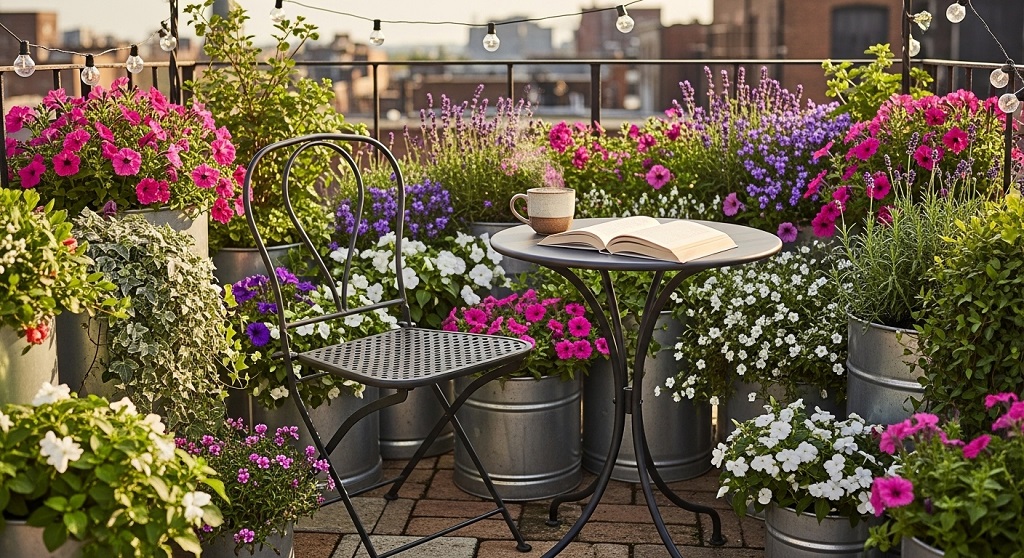
The best terrace designs integrate seating inside plant groupings instead of placing furniture separately.
This creates enclosure and comfort.
- Place tall containers behind benches
- Add medium plants beside chairs
- Use herbs near tables
This arrangement mirrors outdoor café terrace planning strategies used in compact urban environments.
What Mistakes Should You Avoid When Designing a Terrace Container Flower Garden?
The most common terrace container garden mistakes include overcrowding, poor drainage, and uneven plant heights.
Avoid these errors:
- Using identical container sizes everywhere
- Ignoring wind direction
- Overwatering small pots
- Choosing plants without sunlight matching
Correcting these improves plant survival rates significantly.
Conclusion: How Can You Start Your Terrace Container Flower Garden Today?
A container flower garden transforms a terrace into a structured outdoor living area using layered plant placement, smart container selection, and seasonal rotation strategies. Instead of treating pots as decoration, treat them as architectural elements that shape movement, privacy, and atmosphere.
Start with three container heights, group plants in clusters, and frame your terrace edges first. Then add seasonal accents gradually. Even a small terrace can feel like a private garden when containers are arranged intentionally.
If you want your terrace to feel more inviting this season, begin with one corner cluster today and expand step by step. A well-planned container flower garden grows with your space and lifestyle.
Frequently Asked Questions About Container Flower Gardens on Terraces
What is the best container size for terrace flowers?
The ideal container size ranges between 25–40 cm in diameter because it supports root development while preventing fast soil drying.
How many containers should a small terrace have?
A small terrace typically looks balanced with 5–9 grouped containers instead of evenly spaced individual pots.
Can vegetables grow in terrace container flower gardens?
Yes. Herbs, lettuce, tomatoes, and peppers grow well alongside flowers in mixed terrace containers.
Do terrace container gardens require daily watering?
Most terrace containers need watering every 1–2 days in warm seasons because elevated surfaces increase evaporation.
Which flowers survive strong terrace winds?
Geraniums, marigolds, and ornamental grasses tolerate wind exposure better than delicate flowering species.
How do I protect terrace containers during heavy rain?
Use elevated pot feet and ensure drainage holes remain clear to prevent water accumulation.
Can container gardens increase terrace property value?
Yes. Outdoor styling improvements like container gardens increase perceived usable living space, which positively influences buyer impressions.
Read More Also: How to Pick the Best Tools for Home Gardening This Season
Discover More: How to Design a Pet-Friendly Garden Border That Looks Beautiful



Leave a Reply